
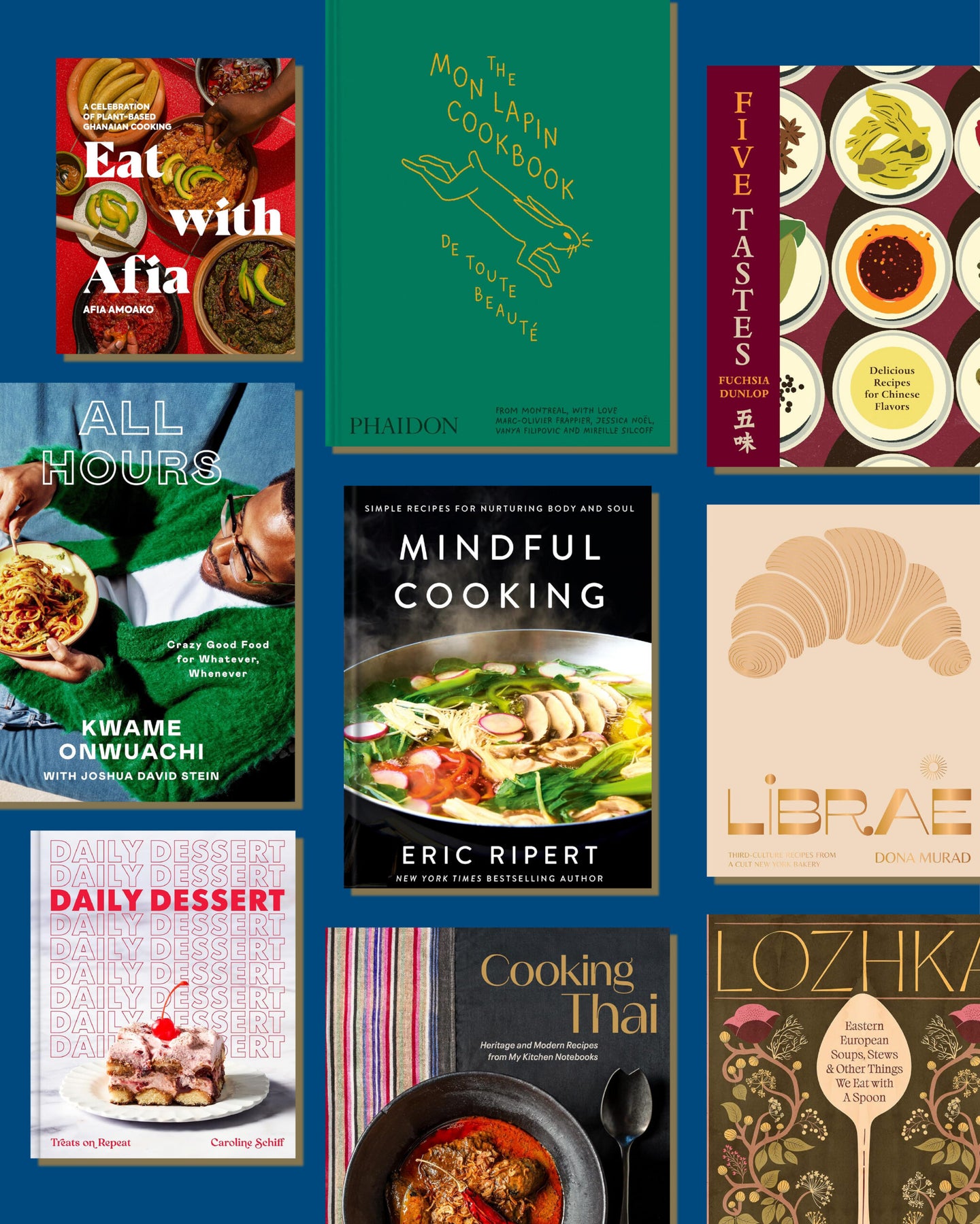

Fall cookbook season is upon us, and in advance of the holidays and cooler nights, that means big-name releases from restaurant-world heavyweights (ahem, Eric Ripert and Kwame Onwuachi) along with topic-based books delving into underrepresented cuisines (Basque, Taiwanese, and plant-based Ghanaian, to name a few) and even specific courses. There’s plenty to choose from this year, which is why we’re presenting a special supersize fall cookbook preview, with 15 of the titles we’re most looking forward to.
Eat With Afia

Ghanaian author Afia Amoako has amassed hundreds of thousands of followers on social media, where her account @eatwithafia highlights Ghanaian and West African cultural traditions and recipes through a plant-based lens. In her lush, colorful debut cookbook, Amoako builds a deeply researched archive of a cuisine that’s often passed down only orally, and we all benefit from her efforts: More than half of the recipes are traditional and unmodified, not modern interpretations, creating an essential record of Ghanaian foodways. Recipes include classics such as jollof rice and okra stew, plus “roadside snacks” like ofam (a sweet plantain-based snacking cake) and drinks including iced Moringa milk tea. (Avery, Aug. 18)
Tramontana: Northern Italian Recipes From Sea to Summit

Australia-born, Sweden-based writer and photographer (and longtime SAVEUR contributor) Simon Bajada has spent years traveling and cooking through the northwestern corner of Italy, specifically the Liguria, Piedmont, and Aosta Valley regions. They are the ones most affected by the tramontana—literally the northern wind that blows down from the Alps, but also, spiritually, a force that sets the foodways of these areas apart, with ingredients like buckwheat, hazelnuts, and hard cheeses in lieu of pasta and tomato sauce. Organized by region, this evocative book (shot on location) features Italian recipes you may not be as familiar with, including sage and anchovy fritters, Ligurian rabbit stew, and paste di meliga (polenta and lemon cookies). (Hardie Grant Books, Aug. 18)
Cooking Thai: Heritage and Modern Recipes From My Kitchen Notebooks

Pim Techamuanvivit is a legend. A former food blogger turned chef of several Michelin-starred Thai restaurants in San Francisco and Bangkok, she is uniquely poised to help guide home cooks interested in understanding the nuances of Thai cuisine. Teaming up with fellow food writing superstar Andrea Nguyen, Techamuanvivit created more than 100 new recipes covering an expansive range of Thai flavors and techniques, including chapters dedicated to “Grilled, Roasted, Simmered, and Steamed” dishes, along with “Stir-Fried and Deep Fried” delights, plus soups, curries, noodles, and more. (Ten Speed Press, Aug. 25)
Scran: Modern Scottish Food Inspired by Tradition

Ali Stoner, aka the delightfully named @rovinghaggis on social media, is a Glasgow-born, Melbourne-based home cook and former Masterchef Australia contestant who tackles the flavors of her heritage in her debut cookbook (the title is Scottish slang for a simple, comforting meal). There are plenty of hearty breakfasts and handheld “savouries” (tattie scones and bacon pieces, “wee tongue sandwiches,” and chicken Balmoral sausage rolls), plus sweet puddings (try the Tipsy Laird trifle), soups, and breads. It’s refreshing to see modern Scottish cuisine given the spotlight, especially in such an approachable, home-cook-friendly fashion—with moody, evocative photos, to boot. (Mitchell Beazley, Sept. 10)
Foods of La Frontera

PBS host and Mexico City native Pati Jinich is back with a new cookbook (following 2021’s Treasures of the Mexican Table). This time she focuses on the cuisines of the borderlands between Mexico and the U.S. (or, as she prefers to call it, “la frontera”). What that translates to is thoughtfully researched dishes that go far beyond Tex-Mex, including skirt steak and shrimp hot pot, seafood fried rice with asparagus and mushrooms, and smashburger tacos with poblano peppers. Throughout, she intersperses personal stories of growing up between two cultures and challenges readers to think beyond the confines of a single place. (Harvest, Sept. 15)
Kincentricity: Connecting to Nature With American Indian Food Traditions

Enrique Salmón is a Rarámuri (Tarahumara) scholar at Cal State University, East Bay, and an expert in the connection between Indigenous foodways and land-management practices and climate change. In his second cookbook, he explores the concept of “kincentricity,” an Indigenous worldview emphasizing the interconnectedness of all living beings and our responsibility to be good stewards of the planet we share. After a comprehensive introduction, Salmón dives into the history, harvesting, and cooking methods of more than 50 Indigenous ingredients, ranging from huckleberries to black walnuts to wild onions. The result is as much an ethnography as it is a cookbook, from an author with the lived experience to guide the newly kincentric-curious. (Rizzoli, Sept. 15)
All Hours: Crazy Good Food for Whatever, Whenever

In his second cookbook, Kwame Onwuachi, the Bronx-raised chef behind Tatiana in New York and Dōgon in Washington, D.C., promises personal recipes “about how I really eat” at any and all hours of the day. What that translates to is big, bold dishes that aren’t afraid to mash up cultures and cuisines, like Red Stew Chicken Parm and Drunken Noodles Alla Vodka. (“That’s not a thing! Well, it wasn’t a thing, but now it is,” he explains.) There are chapters dedicated to sandwiches, the “Holy Grail of the Bronx” (aka New York Chinese food), and “Goddamn Veggie Sides,” which should give you some indication of the verve and voice behind this raucous collection. (Knopf, Sept. 22)
Librae: Third-Culture Recipes From a Cult New York Bakery

Dona Murad is the Bahrain-born owner of New York’s beloved Librae, a self-described “third culture bakery” that draws equally from SWANA flavors and Danish technique. With recipes for pastries like rose and pistachio croissants, za’atar and labneh morning buns, and loomi and lemon curd babka, her debut book is aimed at home bakers who revel in a project, but Murad walks readers of all levels through techniques like lamination with a steady, gentle hand. And with step-by-step photos throughout (plus plenty of beginner-friendly bakes), you’ll be turning out pastries that inspire lines down the block, just like Librae, in no time. (Quadrille, Sept. 22)
Mindful Cooking: Simple Recipes for Nurturing Body and Soul

In his ninth book, Eric Ripert, the celebrity chef and owner of New York’s fine-dining temple Le Bernadin, draws on his travels to Buddhist monasteries across Korea and Japan to put together 75-plus recipes designed to emphasize the joy and mindfulness that cooking with plants can bring. The recipes here hopscotch across Asian, European, and Latin cultures, in chapters introduced by “guiding principles” like gratitude, intention, and joy. That translates to recipes like Radish & Turnip Carpaccio With Yuzu Kosho Vinaigrette, Tamales Rojos, and Seared Tofu With Chili Crisp, among others. Through it all, the boundlessly enthusiastic Ripert encourages home cooks to consider cooking itself as a meditative act and to enjoy the process of nourishing ourselves in both body and spirit. (Random House, Oct. 6)
The Mon Lapin Cookbook

The crew behind the acclaimed Montreal wine bar Mon Lapin—namely co-chefs Marc-Olivier Frappier and Jessica Noël, along with sommelier Vanya Filipovic and coauthor Mireille Silcoff—team up for a cookbook that’s every bit as chic and vibey as the restaurant that inspired it. With chapters like “What Is a Wine Bar Anyway?” and “Every Vegetable Is a Summer Vegetable in Quebec,” their collective voice shines through, and recipes like White Asparagus Soldiers with Good Anchovies and Eggplant-and-Cantaloupe Ceviche belie a deep understanding of quality ingredients and elegant presentation. As to be expected, there’s plenty of wine writing throughout, making this a must for future dinner parties. (Phaidon, Oct. 7)
Daily Dessert: Treats on Repeat

Award-winning New York-based pastry chef Caroline Schiff (formerly of Gage & Tollner) makes her cookbook debut with this bright, cheerful baking book, which encourages readers to consider making and eating some form of sweet treat as a daily ritual. Yes, there are a few advanced-level pastries (such as Hazelnut Roche Profiteroles with Glossy Chocolate Sauce), but most of the recipes are approachable and friendly, as outlined in chapters like “Bake Once, Snack All Week” (snacking cakes) and “Little Bakes Just for You (and Maybe a Friend)”. With a section dedicated entirely to doughs, toppings, and crumbs, Schiff equips bakers of all levels with the confidence they need to make dessert a regular part of their day. (Abrams, Oct. 13)
Essentially Basque: Bringing Spanish Cooking Home

Ernesto’s chef Ryan Bartlow is American, but he spent years living and cooking at the three Michelin-starred Akelarre in San Sebastián, Spain. Despite his fine-dining bona fides, though, what Bartlow really fell for during his time abroad was the rustic, humble side of Basque cooking, codified, as he writes, “on farms, in fishing ports and cider houses.” In his handsome debut with coauthor Laurie Woolever, Bartlow champions recipes with simple ingredients, like a classic tortilla de patatas, callos de Madrileña (a smoky, spicy tripe stew), and a lush crème caramel, along with pintxos and cocktails. This is a book fully steeped in a sense of place, including helpful guides to the Basque language and Basque-Spanish drinking culture, and a travel guide to the region itself, with gorgeous photographs. (Abrams, Oct. 13)
Taiwanese? A Rambling Reflection on the Recipes, Cultures, and People Defining This Island

Eric Sze, the chef behind 886 and Wenwen in New York, teams up with veteran food writer Elyse Inamine for a voicey, intimate, and delightfully neon-soaked exploration of the foods of Taiwan, where he was born and raised. The first half of the book focuses on Taiwanese dishes as they’re presented in Taiwan itself, while the second half is more experimental, covering the fusion-y (a term the chef embraces) recipes Sze has perfected cooking at his New York pop-ups and restaurants, such as Mochi Gnocchi with Chili Oil Pumpkin purée and Beef Noodle Soup Ragu). Shot colorfully on location, this is a book brimming with personality—and a sneakily impressive amount of research—on every page. (Hardie Grant, Oct. 13)
Lozhka: Eastern European Soups, Stews & Other Things We Eat With a Spoon

Siberia-born, London-based academic and food writer Alissa Timoshkina is the author of two previous cookbooks on Eastern European foodways, though she’s perhaps best known as the founder of #CookForUkraine, a global fundraising campaign supporting humanitarian relief. It’s fitting, then, that her latest title is focused on humble-yet-mighty soups and stews from across a borderless collection of Ukrainian, Jewish, Tatar, Hungarian, Polish, Slovak, and Roma traditions. Organized into “Soups & Broths,” “Stews & Grains,” “Dumplings & Pasta,” and “Sweet Comfort,” the chapters highlight the myriad ways in which foods eaten with a spoon have the power to soothe, surprise, and connect people across cultures and conflicts. (Quadrille, Oct. 20)
The Five Tastes: Delicious Recipes for Chinese Flavor

Fuchsia Dunlop, who graduated from culinary school in Sichuan Province, is one of the West’s foremost experts in Chinese cuisine, guiding home cooks with a knowledgeable and compassionate hand. The author of several renowned cookbooks on the topic, she’s back with a strikingly illustrated new volume, focused on the five taste sensations (sweet, sour, salty, bitter, and pungent) that a Chinese cook strives to balance harmoniously within a dish. Instead of a dogmatic approach to traditional dishes, she encourages cooks to apply Chinese seasonings and flavoring techniques to “whatever ingredients you have on hand,” assuring readers that “the ways of the Chinese kitchen travel well.” (W.W. Norton, Oct. 20)
.saveur-newsletter-embed {
–saveur-tomato: #e9552d;
–saveur-peach: #f5be8f;
–saveur-flour: #f7f4ec;
–saveur-kale: #29483d;
–saveur-rule: #a9a9a9;
background: #fff;
color: #000;
font-family: “Source Serif Pro”, Georgia, “Times New Roman”, serif;
width: 100%;
max-width: none;
margin: 34px 0;
padding: 28px 0 30px;
border-top: 2px dotted var(–saveur-rule);
border-bottom: 2px dotted var(–saveur-rule);
text-align: center;
line-height: 1.4;
}
.saveur-newsletter-embed__title {
margin: 0 0 16px;
color: var(–saveur-tomato);
font-family: Louize, “EB Garamond”, Georgia, serif;
font-size: clamp(2rem, 4vw, 2.7rem);
font-weight: 400;
line-height: 0.98;
letter-spacing: -0.01em;
}
.saveur-newsletter-embed__message {
max-width: 38rem;
margin: 0 auto 22px;
font-size: 1.08rem;
line-height: 1.55;
text-align: center;
color: #6b6b6b;
font-style: italic;
}
.saveur-newsletter-row {
display: flex;
gap: 10px;
align-items: stretch;
justify-content: center;
max-width: 38rem;
margin: 0 auto;
}
.saveur-newsletter-row input(type=”email”) {
flex: 1 1 auto;
min-width: 0;
padding: 14px 16px;
font-family: “Source Serif Pro”, Georgia, “Times New Roman”, serif;
font-size: 1.05rem;
line-height: 1.2;
border: 1px solid #000;
border-radius: 0;
-webkit-appearance: none;
appearance: none;
background: var(–saveur-flour);
color: #000;
box-sizing: border-box;
transition: border-color 0.2s ease, box-shadow 0.2s ease, background-color 0.2s ease;
}
.saveur-newsletter-row input(type=”email”)::placeholder {
color: #7b7b7b;
}
.saveur-newsletter-row input(type=”email”):focus {
outline: none;
border-color: var(–saveur-tomato);
background: #fff;
box-shadow: 0 0 0 2px rgba(233, 85, 45, 0.14);
}
.saveur-newsletter-row input(type=”email”).is-success {
border-color: var(–saveur-kale);
background: #fff;
color: var(–saveur-kale);
box-shadow: 0 0 0 2px rgba(41, 72, 61, 0.14);
}
.saveur-newsletter-row input(type=”email”).is-success::placeholder {
color: var(–saveur-kale);
opacity: 1;
}
.saveur-newsletter-row button {
flex: 0 0 auto;
min-height: 54px;
padding: 14px 22px;
border: 1px solid var(–saveur-tomato);
border-radius: 0 !important;
-webkit-appearance: none;
appearance: none;
background: var(–saveur-tomato);
color: #fff;
font-family: “Roboto Mono”, “SFMono-Regular”, Menlo, Consolas, monospace;
font-size: 0.84rem;
font-weight: 400;
letter-spacing: 0.12em;
line-height: 1;
text-transform: uppercase;
cursor: pointer;
white-space: nowrap;
transition: background-color 0.2s ease, border-color 0.2s ease, color 0.2s ease;
}
.saveur-newsletter-row button:hover,
.saveur-newsletter-row button:focus {
background: #000;
border-color: #000;
color: #fff;
}
.saveur-newsletter-row button:disabled {
opacity: 0.85;
cursor: wait;
}
.saveur-newsletter-embed .response {
max-width: 38rem;
margin: 12px auto 0;
font-size: 0.97rem;
line-height: 1.45;
text-align: center;
}
.saveur-newsletter-embed .response(hidden) {
display: none !important;
}
.saveur-newsletter-embed .response.success {
color: var(–saveur-kale);
}
.saveur-newsletter-embed .response.error {
color: var(–saveur-tomato);
}
@media (max-width: 560px) {
.saveur-newsletter-embed {
margin: 28px auto;
padding: 24px 0 26px;
}
.saveur-newsletter-embed__title {
font-size: 2rem;
}
.saveur-newsletter-embed__message {
font-size: 1rem;
margin-bottom: 18px;
}
.saveur-newsletter-row {
flex-direction: column;
gap: 8px;
}
.saveur-newsletter-row button {
width: 100%;
justify-content: center;
}
}
The post The 15 Cookbooks We’re Most Looking Forward to This Fall appeared first on Saveur.
